
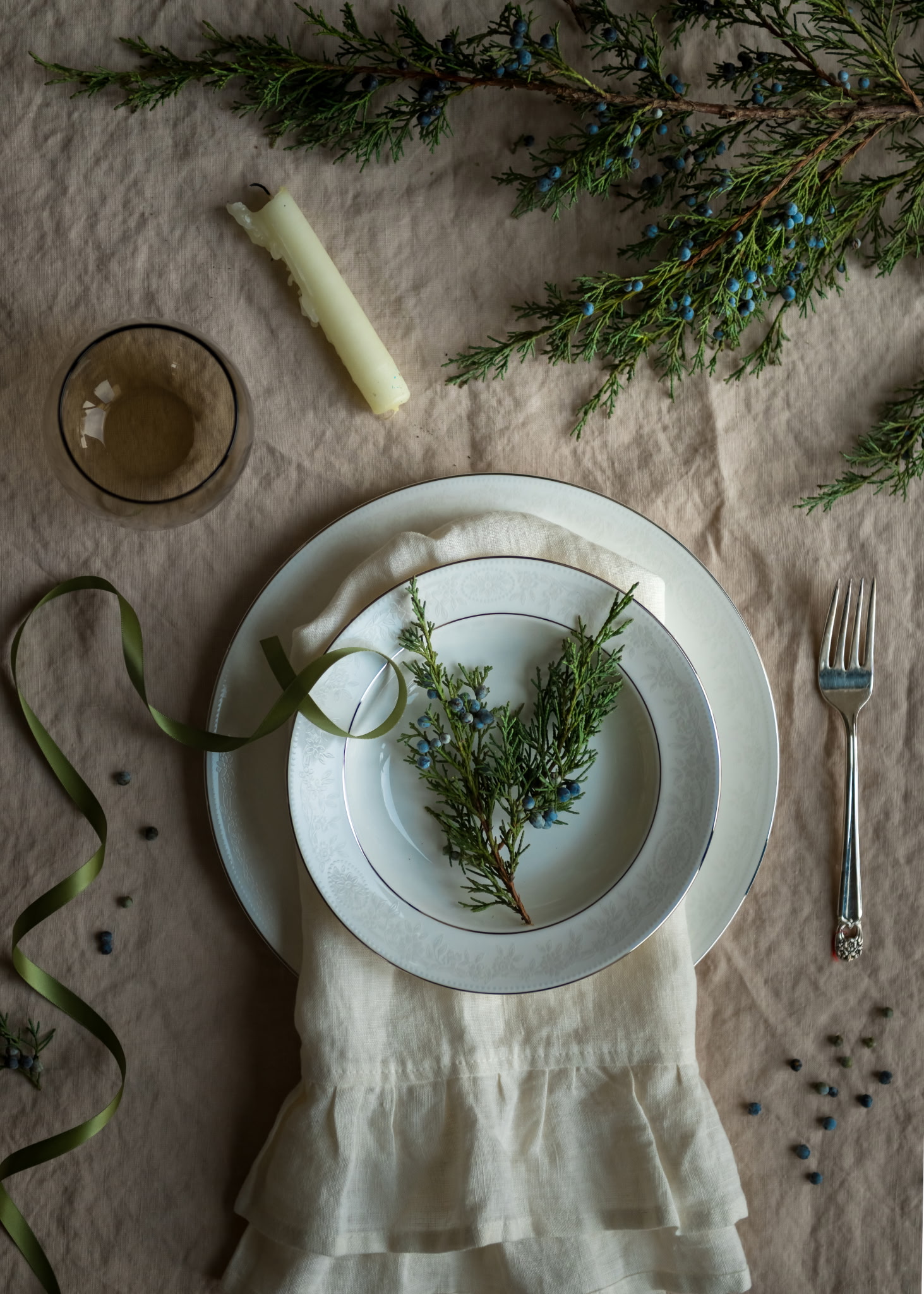
Most of the tablescapes we build have no occasion behind them at all — no holiday, no dinner party, sometimes not even guests. Just a Tuesday, and a table that deserved a few more minutes of attention than a placemat and a napkin. The good news is that an everyday table doesn't need more effort than that — it needs different choices.
Start from what's already growing outside
A trimmed sprig of juniper, a single eucalyptus stem, whatever's on the tree closest to your door — foraged greenery does more for a table than a florist arrangement, and it costs nothing. We reach for something with texture and a little structure (berries, seed pods, a woody stem) over anything that reads as a "bouquet." It should look found, not purchased.
Layer plates you already own
You don't need a second set of china for this. Stacking a dinner plate, a smaller salad plate, and a textured linen napkin creates height and interest using dishes already in the cabinet. The layering is the styling — not the pieces themselves.
One moment of unexpected color
A trailing ribbon, a scattering of berries, a single unlit candle left slightly imperfect — one small, slightly informal detail keeps a table from feeling too composed. We almost always build in one thing that looks like it happened rather than was arranged. It's what keeps a styled table from reading as a photo shoot.
Set it before you need it
The easiest way to make this a habit rather than an event is to set the table before you've decided to have people over — while you're making coffee, before you've had a full day to talk yourself out of it. The tables that feel most natural in our work are rarely the ones planned three days in advance.
None of this requires a special occasion, a new tablecloth, or a trip to buy flowers. It requires deciding, on an ordinary day, that the table is worth a few extra minutes — which is really the whole idea behind everything we do.