
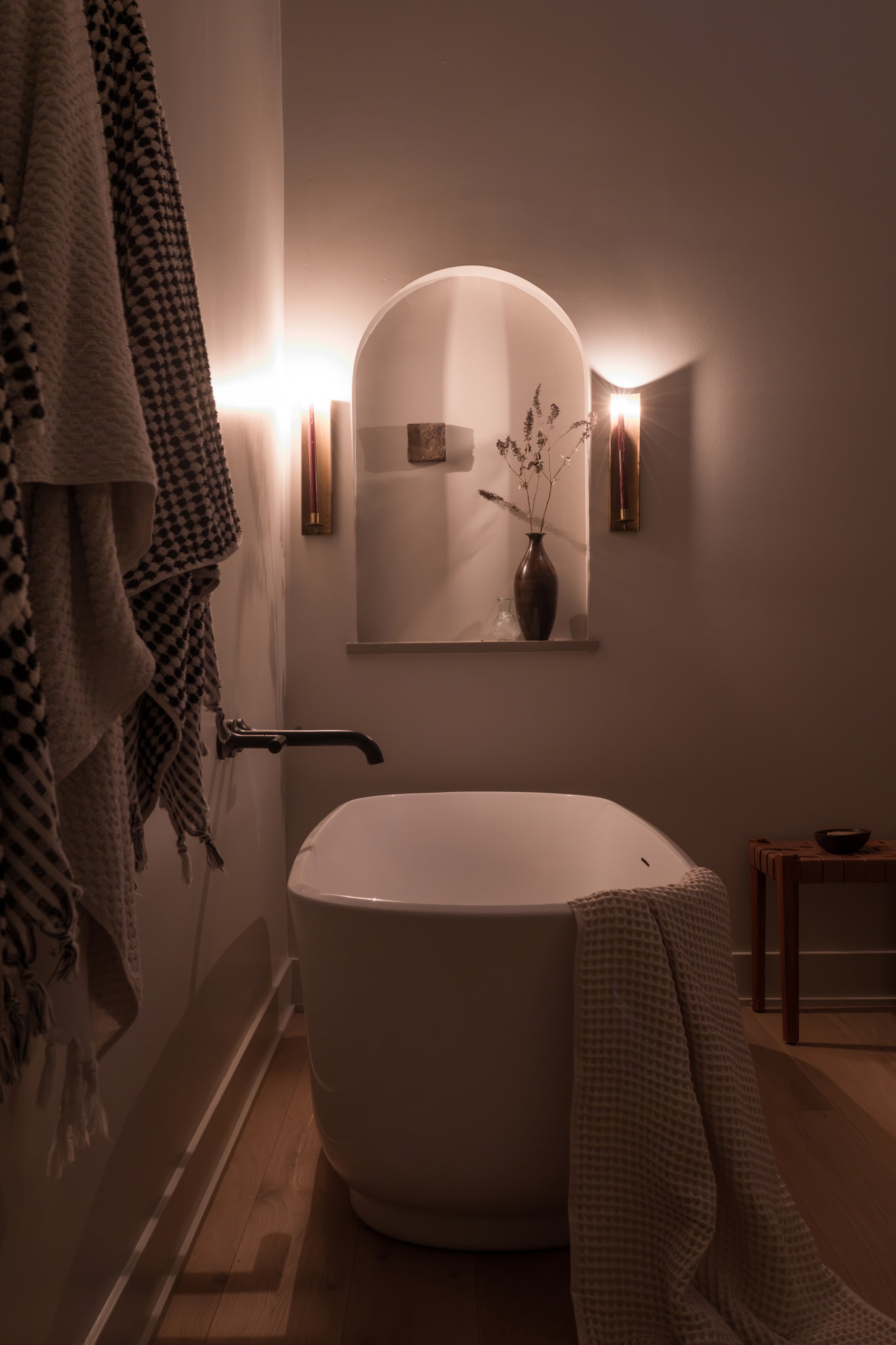
A recessed niche is one of the smallest surfaces we style in a home, and consistently one of the most effective. Unlike a kitchen shelf or a console table, it has a frame built right into the architecture — which means it forgives almost nothing. Every object earns its place, because there's nowhere for the eye to look but there.
Start with the light, not the objects
Before we choose a single vase, we look at how the niche is lit. A niche flanked by warm sconces reads completely differently at 7am and at 9pm — and the materials that glow (glass, aged brass, glazed ceramic) versus the ones that go flat (matte stone, raw wood) depend entirely on that light. We always style a niche in the lighting condition it'll actually be seen in most, usually evening.
One tall piece, one quiet one
The niches that photograph — and live — best almost always pair one vertical, higher-contrast piece (a dark ceramic vase, a single dried branch) with one small, quiet object beside it: a worn stone, a tiny bud vase, something with almost no visual noise. Two loud pieces compete. Two quiet ones disappear. One of each gives the eye a clear hierarchy.
Let the shadow do some of the styling
Dried branches, a single stem, even a textured tile — in the right light, the shadow an object casts becomes part of the composition. We often choose pieces specifically for the shadow they'll throw across the back wall of the niche, not just their own shape. It's a detail most people never consciously notice, but it's a large part of why a well-styled niche feels alive rather than staged.
Resist the urge to fill it
A niche with three or four objects almost always looks more considered than one with six. Because the space is architecturally framed already, it doesn't need volume to feel intentional — it needs restraint. If you're staring at a niche unsure whether it's "finished," it very likely already is.
This is a small project as far as styling goes — a single afternoon, a handful of objects you likely already own. But it's disproportionately effective, because it's usually the last thing someone sees before they leave a room, and the first thing they notice when they walk back in.